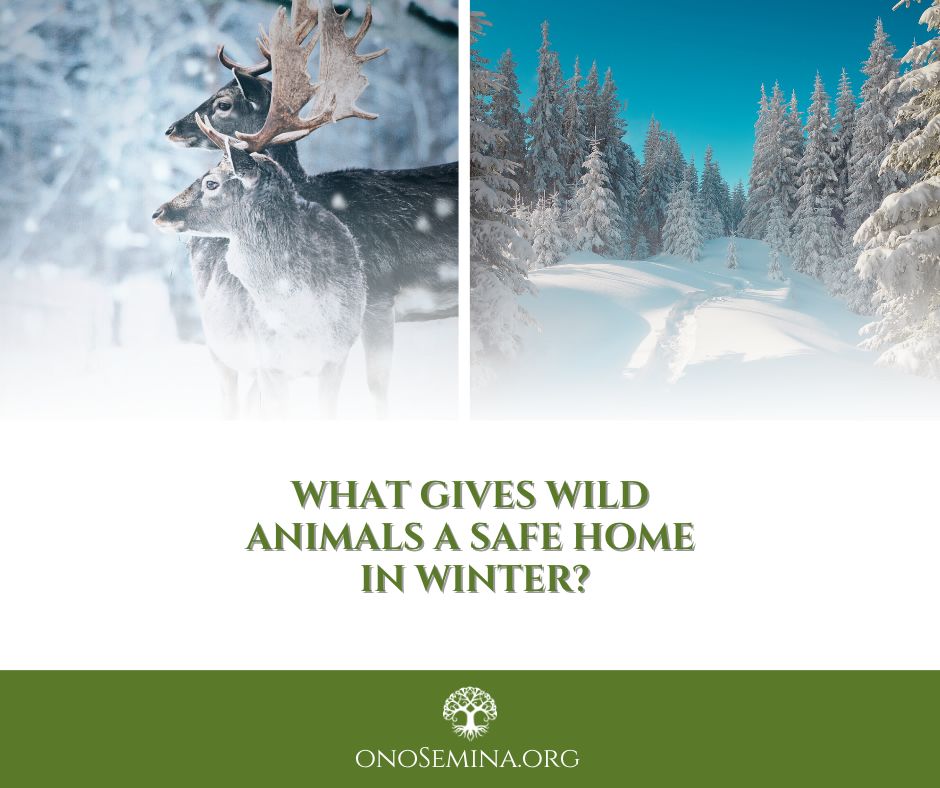
Winter is one of the most challenging periods in the lives of wild animals. Falling temperatures, shorter days and limited food availability mean that survival requires special adaptations. Some species hibernate, while others store food, change their feeding habits or move in search of more favourable conditions. During this time, natural habitats play a vital role by providing shelter, food and safety.
Forests, thickets, old trees, leaf litter and deadwood form a complex network of connections on which the lives of many species depend. This is why protecting wild animals should begin with protecting the environments in which they live. Every remaining fragment of natural habitat can make a difference to local biodiversity.

Winter challenges – how does wildlife cope with the cold?
Animals have developed a variety of strategies to survive the winter. Their behaviour depends on the species, food availability, weather conditions and the environment in which they live.
Hedgehogs prepare for hibernation by finding safe shelters among leaves, branches and vegetation. Squirrels gather food supplies that help them through periods when food is scarce. Many birds remain active throughout the winter, feeding on seeds, berries and other available food sources.
Other species reduce their activity, change their feeding grounds or move to areas offering more favourable conditions.
Each of these strategies shows how well wildlife has adapted to seasonal changes. However, even animals with excellent natural adaptations need a suitable environment to survive this challenging period successfully.
Natural shelters – the forest that sustains life
Old trees, tree cavities, dense shrubs, piles of leaves and fallen trunks play an extremely important role in nature. They provide natural shelter for many animal species while also forming part of a much larger ecosystem.
Tree cavities offer shelter to birds and mammals. Dense vegetation protects animals from wind and predators. A layer of fallen leaves creates wintering places for hedgehogs, insects and other small organisms. Deadwood, in turn, provides a habitat for fungi, invertebrates and numerous species involved in the decomposition of organic matter.
Preserving natural elements of the environment is essential for maintaining biodiversity. Forests need a variety of structures, tree ages and habitat conditions to provide space for many different forms of life.
Food and safety – the importance of native plants
Food availability is particularly important during winter. Native plant species provide animals with seeds, berries and other natural food sources.
Rowan, hawthorn, dog rose and elderberry can provide valuable food for birds. Seeds from herbaceous plants are used by various bird species, while natural vegetation left in gardens and along forest edges supports many organisms.
Access to water is also important. Natural ponds, streams and damp habitats are essential parts of the environment used by wild animals throughout the year.
Protecting native plants and diverse habitats therefore also means protecting food chains and the conditions essential for the survival of many species.
How can we help wild animals in winter?
Helping wildlife begins with a responsible approach to the environment around us. Many actions we take in gardens, parks and green spaces can support local animal populations.
It is worth remembering a few important principles:
- Preserve natural shelters – piles of leaves, pieces of deadwood and dense vegetation can become wintering places for many organisms.
- Plant native species – shrubs and trees that produce fruit in autumn and winter provide food for birds and other animals.
- Feed birds responsibly – choose suitable food, keep feeders clean and feed regularly once you have started.
- Provide access to water – during frosty periods, safe places with unfrozen water are particularly important.
- Limit disturbance to natural habitats – allow animals space to rest, feed and spend the winter.
It is also important to remember that wild animals thrive best in environments that maintain their natural balance. Feeding is only an additional form of support, whereas habitat protection benefits entire communities of species.
Protecting entire ecosystems – an investment in the future of wildlife
The fate of wild animals is closely connected to the condition of the natural environment. A healthy forest provides shelter, food and breeding grounds. Diverse plant communities support insects, birds and mammals, while natural soils and water resources allow the entire ecosystem to function properly.
Habitat degradation, the removal of old trees, the draining of wetlands and the fragmentation of natural areas can reduce the living space available to many species.
That is why it is so important to support initiatives focused on protecting native ecosystems, restoring degraded land and ensuring the long-term protection of restored areas.
Nature needs time, space and suitable conditions to recover its diversity. Ecosystem restoration is a process whose benefits can serve future generations of people and wildlife.
The future of wildlife also depends on us
Every preserved fragment of forest, every protected habitat and every initiative supporting the restoration of the natural environment matters. Nature conservation requires the involvement of many people, collective action and long-term thinking.
We do not have to be physically present in a forest to influence its future. We can support organisations and associations working to protect the environment, native species and natural ecosystems.
Caring for nature together helps create conditions in which wild animals can live, reproduce and benefit from safe habitats. This responsibility extends far beyond a single winter season.

Support nature conservation with onoSemina
Every action taken for nature matters. Every tree planted, habitat protected and ecosystem restored is another step towards a healthier, more diverse planet.
The onoSemina Association works to protect native ecosystems, restore degraded areas and ensure the long-term preservation of our planet’s natural heritage.
You can become part of this mission. Your donation helps us support initiatives that benefit nature and future generations.
Every good thing we give to the world matters. When you support nature, you help create a better place to live for people, animals and all the living beings with whom we share this planet. Goodness comes back through the beauty of the world around us, forests coming back to life, protected habitats and the wildlife we help preserve together.
Join onoSemina. Make a donation and become part of the positive change shaping our planet’s future.
Together, we can create a world where nature has the space it needs to live and regenerate.